
Mudrooms have a pretty tough job. They’re where muddy shoes come off, backpacks get dropped, jackets pile up, and everything from the outdoors seems to find its way inside.
But just because a mudroom works hard doesn’t mean it can’t look beautiful, too!
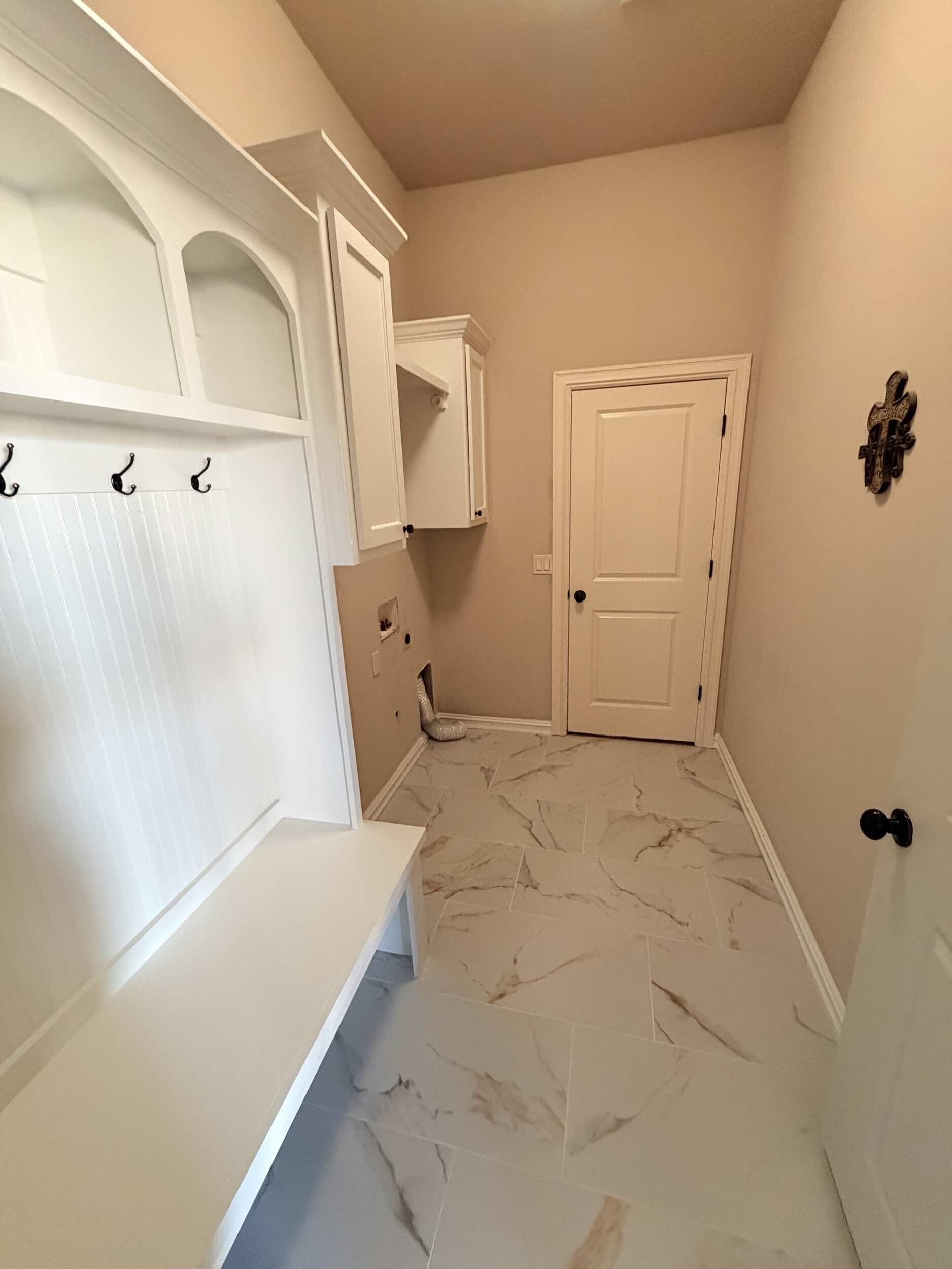
As part of a larger whole-home renovation in Owasso, Oklahoma, our team at Gorilla Brothers Renovations updated this mudroom with fresh paint and new large-format tile flooring. The result is a bright, welcoming space that makes the most of the home’s existing storage and layout.
This project is also a great example of several things worth considering when designing or updating a mudroom: practical flooring, durable paint, functional storage, and a layout that makes everyday routines easier.
From Dark Stained Wood to a Bright White Mudroom
Much like the kitchen in this Owasso home, the mudroom originally featured stained wood cabinetry and the same flooring found in the kitchen.
The space already had a practical setup, including a built-in bench, coat hooks, storage cubbies, and overhead cabinetry.
Rather than removing those features or redesigning the room, we focused on updating the finishes.
Our team painted the existing cabinetry and built-ins white, refreshed the surrounding painted surfaces, and replaced the original flooring with large-format marble-look tile.
The original layout and storage stayed exactly where they were.
While we don’t have a before photo of this particular room, you can see the home’s original stained cabinetry and flooring in our kitchen renovation article, which helps illustrate the overall change in style throughout the house.
It’s a reminder that sometimes a dramatic difference comes from changing the finishes rather than changing the room itself.


1. White Mudroom Ideas: Bright Doesn’t Have to Mean Impractical
One of the first questions homeowners have about a white mudroom is whether it’s practical.
After all, this is the room where dirty shoes, wet jackets, backpacks, and everyday clutter tend to collect.
But white can actually be a great choice for a mudroom, especially when you’re working with a smaller or narrower space.
Light-colored cabinetry and walls help reflect available light, making the room feel brighter and more open. White also provides a versatile backdrop for baskets, hooks, benches, and other storage features.
In this Owasso mudroom, the white built-ins create a clean, cohesive look, while the existing dark coat hooks and cabinet hardware provide contrast.
The key isn’t necessarily avoiding white. It’s choosing finishes and materials that can handle how the room is actually used.
2. Choosing Durable, Easy-to-Clean Paint for a Mudroom
Paint selection is about more than choosing the right color, particularly in high-traffic areas.
Mudroom walls, doors, trim, and built-ins are exposed to plenty of everyday wear. Backpacks brush against surfaces, shoes leave scuffs, and hands seem to find their way onto just about everything.
When planning a mudroom renovation, we recommend considering paint products designed for durability and routine cleaning.
Depending on the surface and product, washable satin or semi-gloss finishes can be useful choices for areas that need frequent attention. Some premium matte and eggshell products also offer excellent washability.
What about using a Magic Eraser on painted walls or cabinets?
It’s a question worth asking, especially when choosing white finishes.
While melamine cleaning sponges can remove certain marks, they’re mildly abrasive and can dull or damage some painted surfaces. For routine cleaning, it’s generally better to start with a soft cloth, mild soap, and water, following the paint manufacturer’s recommendations.
For homeowners who want a bright mudroom without constantly worrying about scuffs, choosing a durable, washable coating from the beginning can make everyday maintenance easier.
3. The Best Mudroom Flooring for Dirty Shoes and Everyday Traffic
Mudroom flooring is one of the most important decisions when planning the space.
Think about everything that comes through the door: rainwater, mud, grass clippings, dirt, and whatever else happens to be stuck to the bottom of someone’s shoes.
That’s why tile flooring is such a practical option for mudrooms and entryways.
For this Owasso project, our team removed the original flooring and installed large-format marble-look tile featuring soft gray and warm-toned veining.
The lighter flooring complements the white built-ins and helps the narrow room feel more open.
Tile offers several advantages in hardworking spaces:
- Easy everyday cleaning: Dirt and debris can be swept or vacuumed, and the floor can be cleaned with a tile-appropriate product.
- Moisture resistance: Properly selected and installed tile handles tracked-in moisture better than many moisture-sensitive flooring materials.
- Durability: Tile is well suited for spaces that experience frequent foot traffic.
- Design flexibility: Large-format tile, patterned tile, and stone-look finishes offer plenty of options for different home styles.
When selecting tile for a mudroom, it’s also important to consider slip resistance, grout maintenance, and the manufacturer’s recommendations for the specific product.
A washable entry mat can help catch dirt and moisture before they travel into the rest of the house.
Don’t Forget About the Grout!
When choosing tile flooring for a mudroom, don’t overlook the grout. While tile is generally easy to clean, traditional grout lines can absorb dirt and stains, especially in areas where muddy shoes and wet boots are part of everyday life.
We recommend asking about high-performance, stain-resistant grout products that don’t require a separate sealer. These products can help make routine cleaning easier and reduce long-term maintenance.
Some modern grout formulations are designed to resist staining without the need for additional sealing, while traditional cement-based grouts may benefit from a separate sealer.
It’s a small detail that can make a big difference in a hardworking space, especially when choosing lighter-colored tile and grout.
4. Mudroom Layout Ideas: Make the Most of the Space You Have
Not every home has room for a large mudroom with an oversized island, rows of lockers, and a separate laundry area.
And that’s okay!
A functional mudroom layout is less about square footage and more about how the space is used.
In this home, the existing layout already worked well. The built-in bench and storage were positioned along the wall, leaving a clear pathway through the room.
For anyone planning a mudroom layout, here are a few things worth considering:
Keep the walkway clear. Mudrooms often connect a garage, exterior entry, laundry room, or main living area. Storage shouldn’t make it difficult to move through the space.
Give everyday items a designated spot. Coat hooks, cubbies, baskets, and cabinets help prevent frequently used items from ending up on the floor.
Consider a bench near the entry. A place to sit while removing shoes can make coming and going much easier.
Think vertically. Wall hooks, upper cubbies, and overhead cabinets can provide useful storage without taking up additional floor space.
Plan around your household. A family with school-age children may need space for backpacks and sports equipment, while another household might prioritize pet supplies, work boots, or outdoor gear.
The best mudroom layout is one that fits the way the people living in the home actually use it.
5. Mudroom Storage Ideas: Built-In Benches, Cubbies, and Cabinets
One of our favorite things about this mudroom is that it already had a thoughtful storage arrangement.
The existing built-in bench provides a convenient place to sit, while the wall-mounted hooks offer easy access to jackets, bags, and other essentials.
Open upper cubbies provide space for baskets or frequently used items, and the overhead cabinetry offers additional enclosed storage.
There’s a benefit to having a combination of open and closed storage.
Open storage keeps everyday items visible and accessible. Closed cabinets provide a place for things you don’t necessarily want on display.
For families considering mudroom organization ideas, baskets and designated storage areas can also make it easier for everyone to keep track of their belongings.
In this particular renovation, none of those storage features needed to be replaced. They were already serving their purpose.
Our team simply updated the paint and flooring around them.
6. Coordinating a Mudroom With the Rest of Your Home
When renovating multiple rooms, we like to consider how the finishes work together throughout the house.
A mudroom may be a more utilitarian space, but that doesn’t mean it has to feel disconnected from the surrounding rooms.
For this Owasso whole-home renovation, the homeowners selected lighter finishes in several areas of the house.
The kitchen’s original stained cabinetry was painted, the flooring was updated, and other rooms received their own improvements.
Carrying a similar bright, neutral appearance into the mudroom helped create a more cohesive overall design.
The white built-ins, dark hardware, and marble-look flooring give the room a clean, timeless appearance without competing with the rest of the home.
And because the existing cabinetry and storage remained in place, we were able to accomplish that without redesigning the space.
7. Do You Need a Complete Mudroom Remodel?
Not necessarily.
One of the biggest considerations when planning any renovation is determining what actually needs to change.
If the layout is awkward, storage is insufficient, or the room doesn’t function well for your household, a more extensive remodel may make sense.
That could involve adding custom cabinetry, building a bench, changing the layout, or incorporating additional storage.
But if the existing features are in good condition and already meet your needs, updating the paint and flooring may be enough.
That’s the approach we took with this mudroom.
The existing storage worked, the layout was functional, and there was no need to replace those elements simply for the sake of replacing them.
Sometimes, knowing what to keep is just as important as knowing what to change.
Frequently Asked Questions About Mudroom Design
What is the best flooring for a mudroom?
Porcelain tile is often an excellent option because of its durability, moisture resistance, and ease of cleaning. Look for flooring suitable for the intended traffic and moisture conditions, and consider slip resistance when choosing a finish.
Is white a good color for a mudroom?
Yes! White can make a small mudroom feel brighter and more open. Choosing durable, washable paint and easy-to-maintain surfaces helps make light-colored finishes practical for everyday use.
What should every mudroom have?
A functional mudroom typically benefits from a clear walkway, a place for shoes, hooks for jackets and bags, and some combination of open or closed storage. A bench is also helpful when space allows.
How do you make a small mudroom more functional?
Focus on vertical storage, wall-mounted hooks, compact bench seating, and keeping the floor area clear. Even a narrow mudroom can be highly functional when storage is planned around daily routines.
Does mudroom grout need to be sealed?
Not always. Some high-performance grout products are formulated to resist stains without requiring a separate sealer. Traditional cement-based grouts may benefit from sealing, depending on the product and manufacturer’s recommendations.
Can you update a mudroom without replacing the cabinets?
Absolutely. If the existing cabinetry and built-ins are in good condition, painting them and updating the flooring can significantly change the appearance of the space without altering its layout.
A Bright Mudroom That’s Ready for Real Life
We love seeing a beautifully finished room, but we also know that homes are meant to be lived in.
Mudrooms are going to get dirty. Shoes will bring in mud, jackets will get tossed on hooks, and backpacks will probably end up somewhere they don’t belong.
That’s just everyday life!
With durable flooring, thoughtfully selected paint, and practical storage, a mudroom can be both beautiful and functional.
This Owasso project shows that even a smaller space can contribute to the overall look and feel of a whole-home renovation.
And sometimes, fresh paint and new flooring are exactly what a room needs.
Explore More of This Owasso Whole-Home Renovation
We’re sharing the different spaces from this project, including the materials, finishes, and decisions that went into each one.
At Gorilla Brothers Renovations, we help homeowners throughout Tulsa, Owasso, Broken Arrow, Bixby, Jenks, and surrounding communities with renovations ranging from individual rooms to whole-home projects.
Have a hardworking space in your home that could use a little attention? We’d love to hear what you have in mind.

Leave a Reply